
Biblical Shepherding: Recovering the First-Century Perspective - Part 1
The Biblical Shepherd – Strengths of the Metaphor and Lessons from Moses

In the world of first-century Galilee and Judea (and in the prophetic traditions that shaped Scripture) shepherding was a deep human calling. The shepherd walked with his flock across open ranges, guiding them by voice, by presence, and by the gentle use of a staff. This was not a delegated task; the shepherd himself was the leader, protector, and provider. Scripture’s point of view centers entirely on this direct, relational bond: the shepherd knows the sheep by name, calls them, leads them out, and lays down his life for them (John 10:3–4, 11).
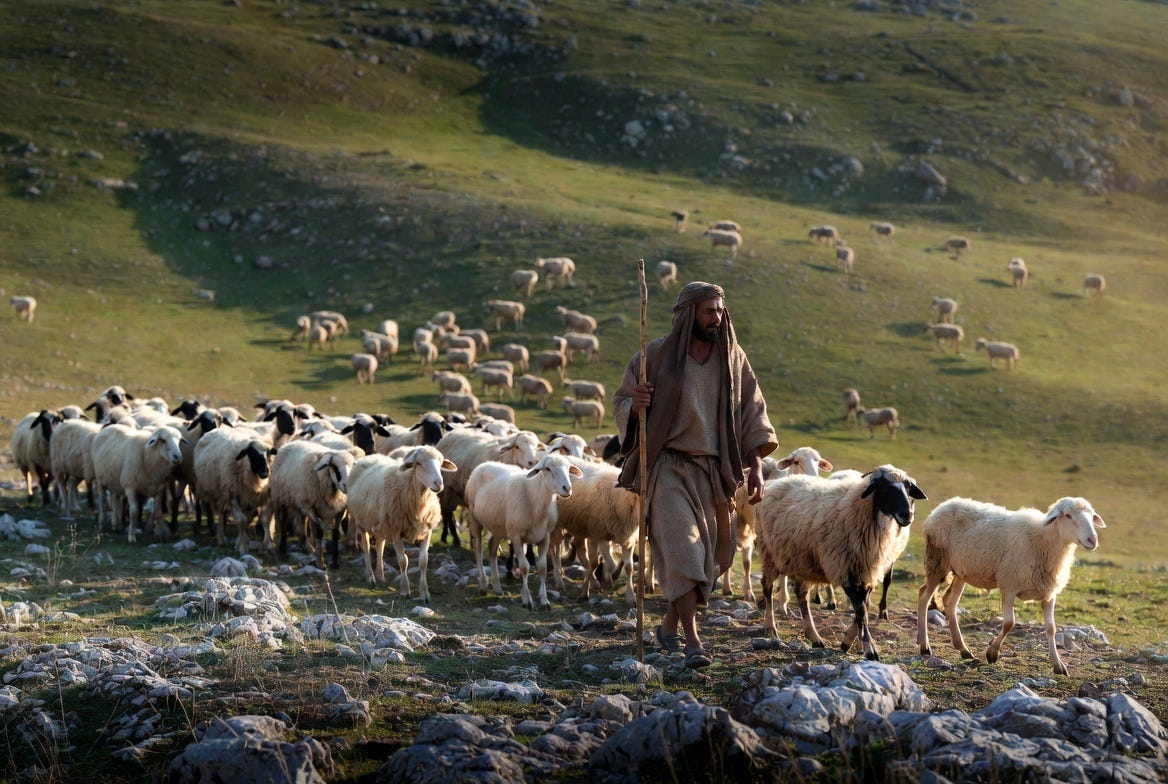
Dogs or other beasts play no role in this biblical metaphor. In the ancient Jewish context, dogs were often viewed as unclean or wild (see 1 Kings 14:11; Isaiah 56:10–11), and the idealized shepherd model never relies on them. The image is pure: one human shepherd, intimately caring for the flock, without intermediaries or force. This stands in contrast to later cultural practices that introduced dogs for herding practices foreign to the scriptural narrative.
Modern church discussions sometimes carry those later assumptions into the metaphor, which can obscure what the biblical authors intended. This series returns to Scripture’s own perspective: the strengths of the shepherd image, its necessary limits when applied to adult believers, and the clear call to equip God’s people toward maturity in Christ (Ephesians 4:11–16). It contrasts faithful, human-led leadership with unfaithful patterns that scatter the flock (Ezekiel 34), all grounded in the first-century understanding of shepherding as personal, gentle, and relational. Time spent around sheep as a young man confirms something often missed: shepherding is as much personal body control as flock control. The shepherd’s calm posture, steady voice, deliberate movements, and quiet presence are what keep individual sheep calm and willing to follow. Sudden tension or force scatters; embodied peace gathers. This embodied reality is why the biblical authors chose this image: it reveals leadership as intimate, personal, and relational, not merely positional or directive.
The Biblical Ideal of the Shepherd
The Bible presents shepherding as a noble, instructive, and economically vital way of life. It sustained families and communities through livestock wealth (Genesis 13:2; Genesis 30–31). It served as a powerful visual tool to teach leadership: the shepherd’s daily care guiding, feeding, and protecting mirrors God’s own relationship with His people. God is repeatedly called the Shepherd of Israel (Psalm 23; Psalm 80:1; Ezekiel 34), emphasizing tender provision, intimate knowledge, and sacrificial care.
Jesus embodies this fully as the Good Shepherd who knows His sheep by name, leads them out to pasture, and lays down His life for them (John 10:11–18). Unlike hired hands who flee danger, He stays and protects setting the standard for all leadership.
Moses as the Model Shepherd-Leader
Moses perfectly embodies this biblical ideal. After fleeing Egypt, he spent forty years tending Jethro’s flock in Midian (Exodus 3:1). Far from wasted time, this season became God’s school of leadership. Later Scripture describes Israel’s deliverance in shepherding terms: “You led your people like a flock by the hand of Moses and Aaron” (Psalm 77:20; see also Numbers 27:17).
Moses led with availability rather than intrusion. He sat openly in the camp so the people could come to him with their disputes (Exodus 18:13–16). He did not patrol or pressure them; he taught God’s statutes to those who approached. This posture flowed from his deep intimacy with God, “face to face, as one speaks to a friend” (Exodus 33:11), and from wisdom empowered by the Spirit (Numbers 11:17; Deuteronomy 34:9).
When Jethro saw the burden, Moses wisely delegated. He appointed capable leaders over thousands, hundreds, fifties, and tens, handling only the hardest cases himself (Exodus 18:17–26). The result was sustainable leadership and a more mature community.
Rabbinic Affirmation of the Biblical Ideal
Early rabbinic midrashim reinforce this positive view of shepherding. In Shemot Rabbah 2:2, Moses proves his worth through compassion: a young lamb wanders off, exhausted. Instead of scolding it, Moses gently lifts it onto his shoulders, carries it back, and says, “You must be tired from running.” God responds, “Because you have shown mercy to a mortal’s flock, you will shepherd My flock, Israel.”
Similarly, midrashim on David highlight his attentive care: he fed the youngest lambs the tender grass, the older sheep the tougher blades, and the strongest rams the roughest grass, each according to its need. God declared that the one who feeds sheep with such wisdom is fit to feed His people (Midrash Tehillim and parallels).
These stories portray shepherding as training in humility, justice, and
attentiveness, essential qualities for godly leadership.
Later Talmudic writings (e.g., Babylonian Talmud Baba Kama 80a) sometimes reflect a more negative view of shepherds, shaped by urbanization, land conflicts, and a shift toward settled community life. This “negative tinge” does not cancel the earlier ideal preserved in Scripture and early midrash. It simply reminds us: cultural perceptions can drift, but the biblical vision remains our anchor.
Strengths of the Metaphor
In Scripture’s perspective, the shepherd image offers rich insight:
Relational care: Knowing each one intimately, calling by name.
Gentle guidance: Leading to green pastures, quiet waters (Psalm 23:2–3).
Protection and sacrifice: Defending against threats, laying down life (John 10:11).
Compassion for the weak: Seeking strays, binding the injured (Ezekiel 34:16).
Professional low-stress herding echoes this: shepherds act as trusted leaders, walking ahead to guide flocks to fresh pastures. They build trust through calm presence, voice calls, and gradual habituation, avoiding force that causes panic. Sheep follow willingly when they see the shepherd as a source of safety and provision mirroring how biblical leaders invite rather than dominate.
This metaphor powerfully conveys compassionate, relational leadership. Yet it has boundaries when applied to human believers in the New Covenant.
What do you think?
How does this first-century picture of the shepherd challenge or refresh your understanding of leadership and discipleship in the church today?
May the Shepherd of Israel guide you along the ancient paths.
William
Follow this Link for Extra context & deeper dives: