
Biblical Shepherding: Recovering the First-Century Perspective - Part 2
The Limits of the Metaphor - People Are Not Sheep

Grace and peace.
The shepherd-sheep metaphor in Scripture is rich and powerful, conveying God’s tender care, guidance, and sacrificial love. It paints a vivid picture of relational leadership in the first-century world; human shepherds walking intimately with their flocks, calling them by name, leading them to pasture, and protecting them from harm. Yet every metaphor has boundaries. While it illuminates aspects of divine and human leadership, it reaches its limits when applied to adult believers in the New Covenant.
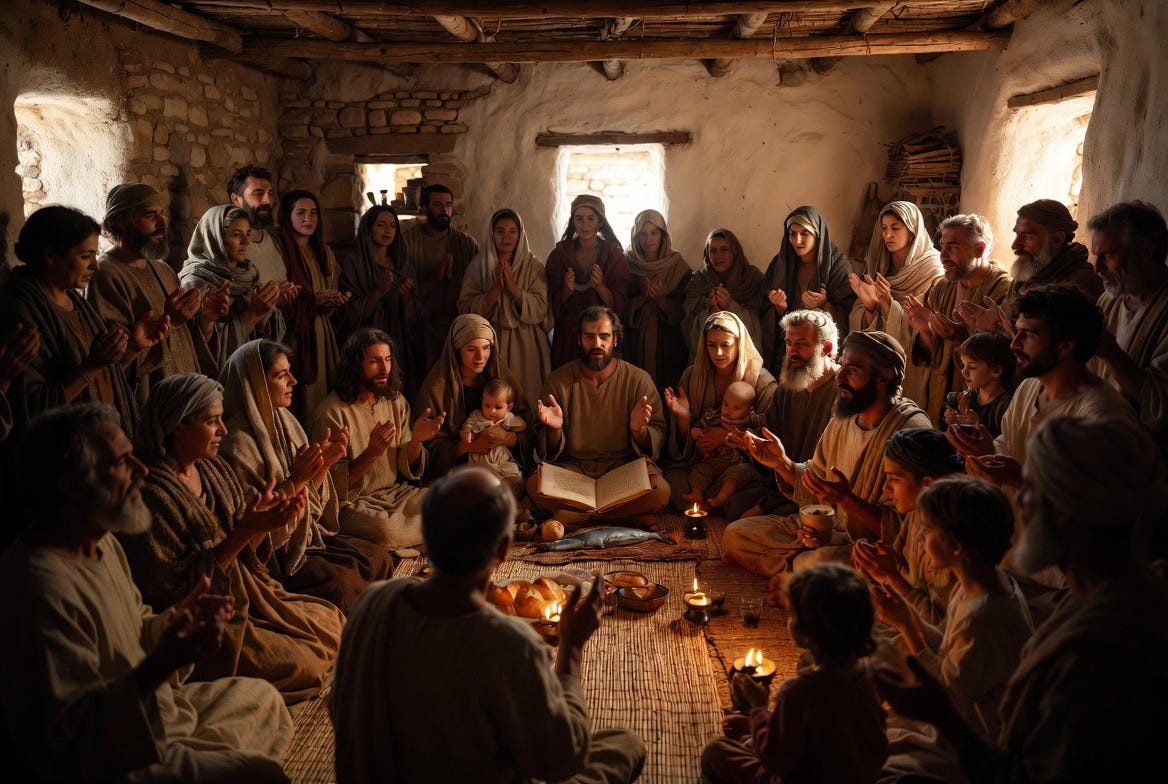
Sheep vs. Human Believers: The Key Distinction
Sheep are instinct-driven creatures. They rely entirely on external guidance to avoid danger, find food, and stay together. Without the shepherd’s constant direction, they scatter, stray, or perish. This dependency is inherent to their nature.
Adult human believers, however, are created in God’s image (Genesis 1:26–27) endowed with intellect, volition, moral responsibility, and the capacity for growth. Mature believers already manage real adult life: paying bills, raising families, making decisions, contributing to society, and walking in faith. Treating them as perpetual dependents needing constant oversight, approval, or direction contradicts Scripture’s call to maturity.
The New Testament is explicit about this progression. Believers begin as spiritual infants needing milk (1 Peter 2:2), but they are to grow toward solid food discerning good from evil through practice (Hebrews 5:12–14). The goal is not lifelong subordination but development into “mature manhood, to the measure of the stature of the fullness of Christ” (Ephesians 4:13).
The Biblical Mandate: Equip for Maturity, Not Dependency
Ephesians 4:11–16 lays out the clear purpose of pastoral leadership:
“And he gave the apostles, the prophets, the evangelists, the pastors and teachers, to equip the saints for the work of ministry, for building up the body of Christ, until we ALL attain to the unity of the faith and of the knowledge of the Son of God, to mature manhood, to the measure of the stature of the fullness of Christ...”
Pastors and teachers are given as gifts not to do all the ministry themselves, but to equip (prepare, mend, perfect) the saints; all believers for the work of ministry. The outcome is a mature body where “each part” works properly, growing together into Christ (Ephesians 4:16).
When leaders centralize ministry, override voices, or keep members in perpetual “sheep” mode, growth stalls. The flock becomes dependent rather than interdependent. This is not the scriptural pattern. Healthy leadership steps back, delegates responsibility, and rejoices when believers exercise their gifts, express their voice, and even surpass their leaders in maturity or impact (as Paul rejoiced in Timothy and others advancing the gospel, Philippians 2:19–22; 2 Timothy 2:2).
Signs of Misalignment
In the first-century biblical view, leadership was relational and equipping. Signs that the metaphor has been stretched beyond its limits include:
Pastors who must be central to every decision or issue.
Congregants feeling their maturity or input is dismissed or subordinated.
A culture where adult believers are treated as perpetual children rather than co-laborers in Christ (Galatians 3:28).
Emphasis on control rather than equipping toward independence under the Chief Shepherd.
Ezekiel 34 warns against such patterns: unfaithful shepherds who feed themselves, neglect the weak, rule harshly, and scatter the flock. God promises to judge them and shepherd His people Himself ultimately through the Good Shepherd (Ezekiel 34:23–24; John 10).
The Lesson from the First-Century Perspective
In Scripture’s own viewpoint, the shepherd metaphor is positive and instructive when used to describe God’s care and human leadership modeled on it. But it is not absolute. Adult believers are not literal sheep. They are image-bearers called to grow, participate, and mature equipped by leaders who serve humbly under Christ, not lording over the flock (1 Peter 5:3).
The metaphor breaks down precisely where dependency ends and maturity begins. True pastoral leadership celebrates this transition: members becoming equals in service, using their gifts freely, and advancing the kingdom. A real pastor steps back, equips, and rejoices when the flock thrives independently under the Chief Shepherd.
What are your thoughts?
Where have you seen the shepherd metaphor used well to encourage maturity and where might it have been stretched into unhealthy dependency? I’d love to hear your reflections in the comments.
May the same Shepherd who restores souls and leads us beside still waters guide you this week along the ancient paths.
William
Follow this Link for Extra context & deeper dives: