

Galilee Gazette - #29
By your humble correspondent in Antioch, the 29th day of the month of Sivan, in the 18th year of Tiberius Caesar
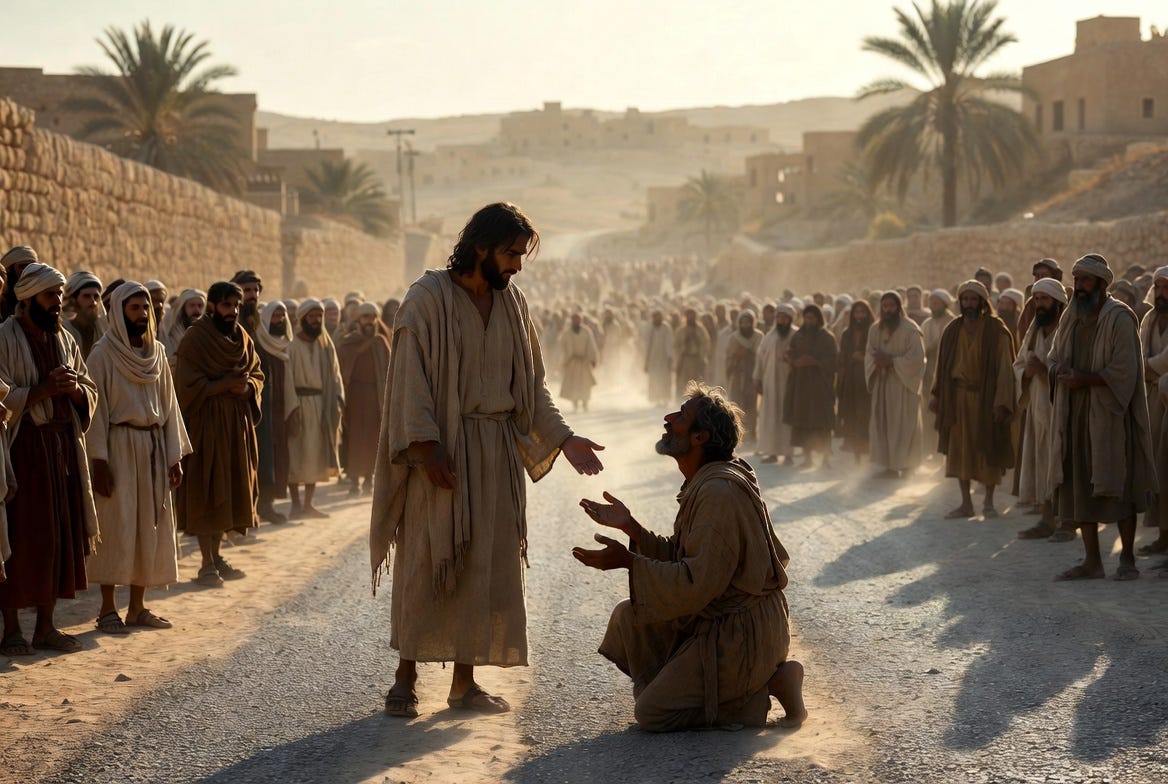
Antioch, that bustling hub of Greek learning and Roman order where Stoics debate fate in the shade of colonnades and merchants haggle under the watchful gaze of imperial states sends its ears to the dusty road out of Jericho. There, amid the press of pilgrims bound for the Temple feasts, a scene unfolded worthy of the greatest theater in Ephesus or the sharpest satire of a Cynic philosopher. A blind beggar named Bartimaeus, son of Timaeus, sat by the roadside in his perpetual darkness, his cloak spread for alms, his voice honed by years of shame-driven cries.
As the Nazarene teacher Jesus passed by with his band of followers and a great crowd, pilgrims no doubt murmuring about purity laws, Roman taxes, and the latest whispers from the Sanhedrin; Bartimaeus caught wind of the name “Jesus of Nazareth.” Without hesitation, this outcast of honor-shame society began to shout: “Jesus, Son of David, have mercy on me!” The crowd, ever quick to enforce social order like stern gymnasium trainers rebuking the unfit, sternly ordered him to be silent. Yet the beggar cried out all the more loudly, undeterred by the honor-shame dynamics that would have silenced lesser men.
Jesus stood still halting the procession like a true patron bestowing favor and called for the man to be brought forward. “Take heart; get up, he is calling you,” they said. Bartimaeus threw off his beggar’s cloak (a prized possession for one so low), sprang up, and came to Jesus. “What do you want me to do for you?” asked the teacher. “Rabbi, let me recover my sight,” came the reply. And with words that echoed the ancient prophets more than any imperial edict, Jesus declared, “Go your way; your faith has made you well.” Immediately Bartimaeus regained his sight and followed Jesus on the road.
As Josephus notes in his accounts of the region’s turbulent life under Roman rule, such places as Jericho teemed with the marginalized whose cries often went unheard amid the machinery of empire and temple. Yet here, a blind man pierced through the noise not with philosophy or patronage, but raw, persistent faith in the promised Son of David.
Cultural Shocks Most Modern Readers Miss
Blindness as Divine or Demonic Curse: In 1st-century Judea and Greco-Roman culture alike, physical blindness often carried the stigma of sin, ancestral fault, or demonic influence much like the assumptions in Greek tragedy or Jewish purity debates. Bartimaeus’s bold messianic cry defied this, claiming dignity before the “Son of David.”
The Beggar’s Cloak and Honor-Shame: Throwing off his outer garment was a dramatic act of vulnerability and hope; in a patronage society where status defined everything, this man risked total exposure to approach the healer.
“Son of David” as Explosive Claim: This title invoked royal messianic hopes amid Roman occupation, dangerous talk on a pilgrim road, echoing prophetic fulfillments that challenged both imperial cult and sectarian expectations.
Faith Over Ritual or Status: Unlike temple scribes or gymnasium-educated elites debating fate (à la Epictetus or Seneca), a roadside outcast’s persistent faith moved the miracle-worker flipping honor-shame hierarchies on their head.
Biblical Shocking Takeaway - True sight begins not with eyes, but with crying out to the Son of David in shameless faith while the “seeing” crowd often remains blind.
What “roadside” cry are you tempted to silence in your own life out of shame, crowd pressure, or doubt and what might happen if you raised it louder to Jesus today? Share your thoughts below; the ancient paths welcome honest voices.
Follow this Link for Extra context & deeper dives:
© 2026 Galilee Publications
Rush the shores, where one blind beggar sees more clearly than the healthy crowd.