
Light Before the Lights: Genesis 1 and the Early Universe Record
Our Heavens Declare – Issue 1

Welcome to the first full examination in Our Heavens Declare.
In Moses’ time, everyday observation linked light directly to the sun, fire, or the moon and stars at night. Ancient cultures often treated the sun as a primary source of light and life, sometimes even as a deity.
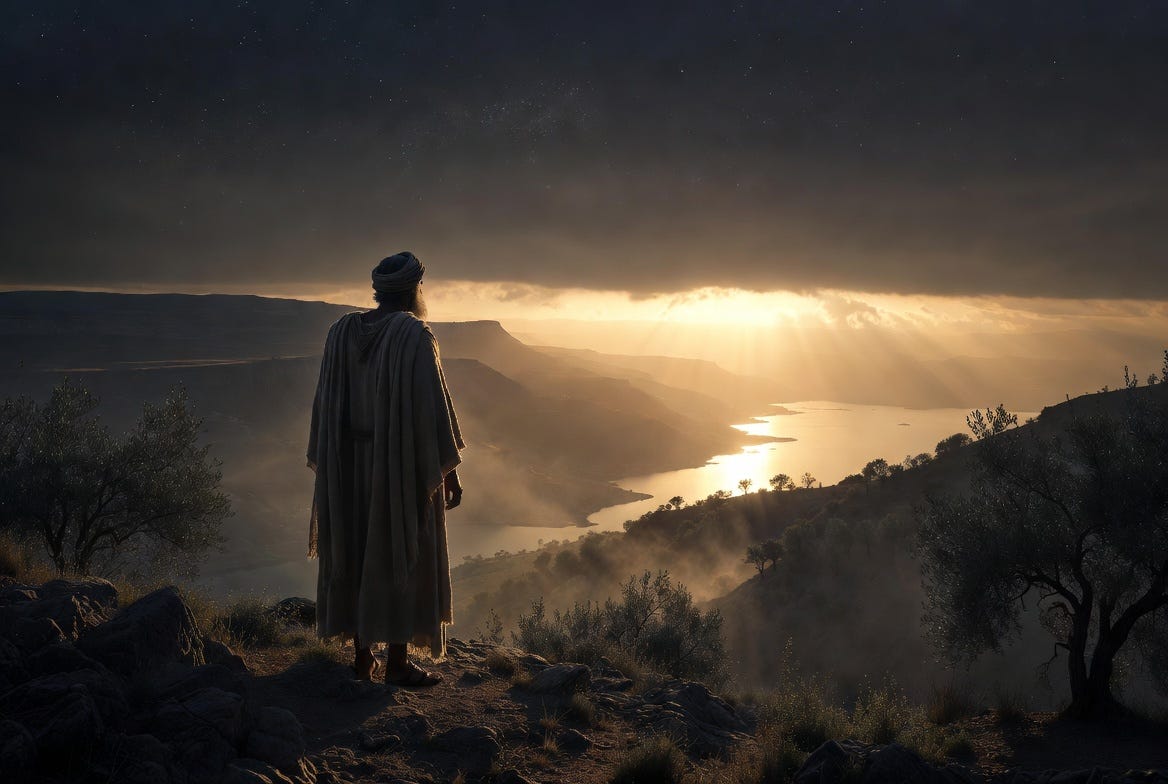
Yet Genesis 1 presents a striking sequence. It opens with “In the beginning God created the heavens and the earth.” The earth is formless and empty; darkness covers the deep. Then God says, “Let there be light,” and there is light. He separates light from darkness, calls the light “day” and the darkness “night,” and completes the first day. Only on the fourth day do the sun, moon, and stars appear as the greater and lesser lights and the stars to govern the already-existing day and night.
Modern cosmology describes the universe beginning in an extremely hot, dense state filled with intense radiation. As the universe expanded and cooled over hundreds of thousands of years, this radiation traveled freely, leaving a faint but uniform echo we detect today in every direction, the cosmic microwave background. Setting aside the question of time scales, both accounts place the emergence of light (or radiation) very early, in an initial hot and unstructured state, long before the formation of stars and other light sources.
If one is going to be honest about the text, certain details require direct engagement. Linguistically and culturally related peoples across the ancient Near East shared broad memories of creation. Those accounts often drifted into polytheism, cosmic conflict, and pictures of early light coming from a god’s own radiance or presence. Genesis does something different and restorative: God speaks light into existence as a created, self-sustaining reality that immediately functions to mark day and night. The same pattern continues: God creates the sun, moon, stars, waters, dry land, and vegetation as realities that function on their own once established.
These similarities in sequence do not turn the Bible into a scientific treatise, nor do they require every detail to match current models. I do not want to overstate the parallel. Yet the distinctive order - an absolute beginning, a dark and formless state, the sudden appearance of light and a functioning day/night cycle long before the placement of the sun, moon, and stars - raises a fair question: Who told Moses? A writer in his ancient cultural setting, relying on ordinary observation or surrounding ancient myths, would have had no obvious basis for separating light itself from its primary visible sources. A scientific mind, trained to follow evidence and patterns, must at least confront the question of how this detail entered the biblical text. The question persists: Who told Moses?
The volume and distinctiveness of these orderly patterns call for thoughtful, rigorous engagement. The Bible is written for everyone, including those with scientific training. It speaks in the language of observable patterns, orderly sequence, and concrete records; language that can resonate with an inquiring mind even when the context differs from modern laboratory reports. Scientists therefore have a natural place in this conversation and in the church because the text itself invites honest dialogue rather than division.
When read on their own terms, the records open space for real conversation across backgrounds. Believers gain sharper insight into the deliberate structure God included. Those familiar with scientific descriptions find material that richly rewards attention to sequence and beginnings.
The opportunity stands clear: set aside old assumptions and examine the records directly.
Future pieces in Our Heavens Declare will continue exploring specific datasets in greater depth. This is the invitation to meet on the path where Our Heavens Declare. Readers from any background, especially those trained in careful observation and evidence, are encouraged to bring questions and honest observations to the comments and join the discussion.
Blessings,
William
Follow this Link for Extra context & deeper dives: