
Noah and the Waiting Watchmen: Parallels and Lessons from the Great Prophet

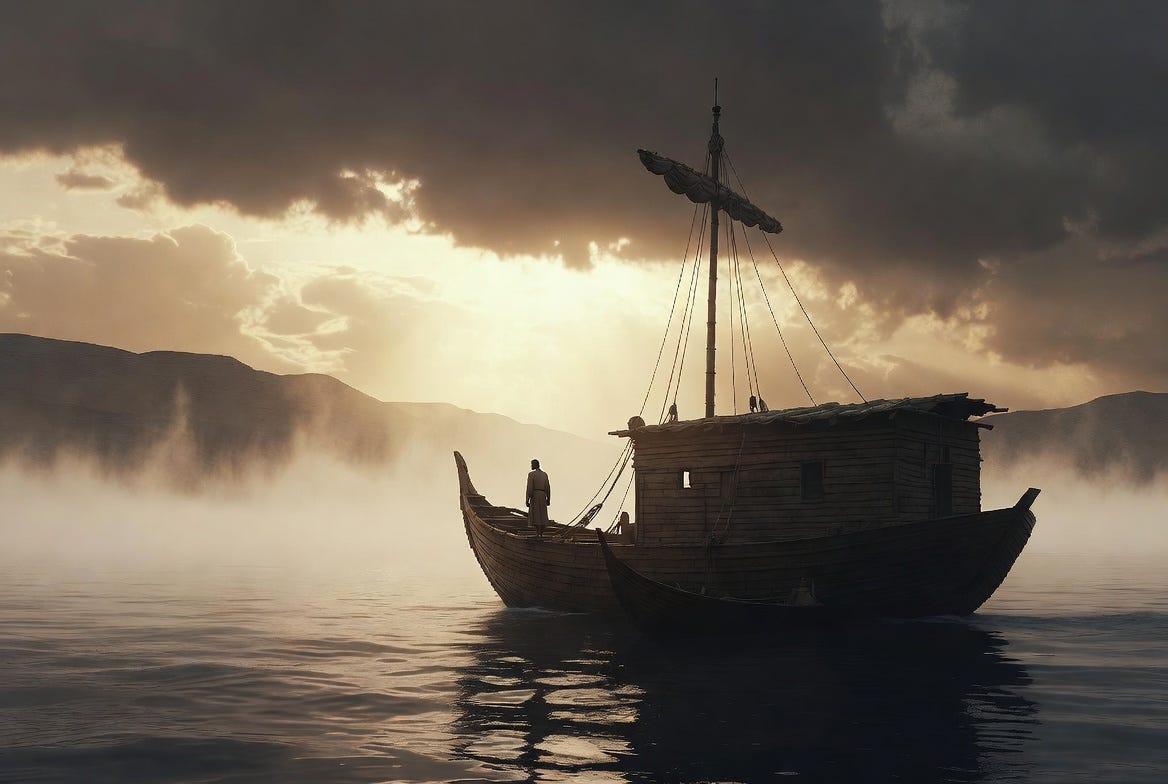
In the days before the great flood, a solitary figure labored for years under divine instruction. The ark stood complete, a massive vessel of deliverance amid a world grown corrupt. Noah, his family, and the animals entered as commanded. For seven days they waited inside the finished structure while the skies remained clear. Then the Lord shut the door, the rains descended, and the journey through judgment into a renewed creation began. This ancient account, preserved in Genesis, offers more than a tale of catastrophe and survival. It presents a profound pattern of prophetic preparation, one that echoes across Scripture and speaks directly to those who watch for the appointed times.
Patterns and Rehearsals in the Flood Narrative
The flood story unfolds as a miniature of new creation. Just as the Spirit hovered over the waters in Genesis 1, the waters of judgment recede to reveal dry ground and a fresh start. The ark itself carries temple-like dimensions and symbolism: a place of separation, safety, daily worship, prayer offerings, psalmistic continuance, and ordered life preserved through chaos. Noah emerges not merely as survivor but as a priestly figure. He builds an altar and offers burnt sacrifices of every clean animal and bird: acts of thanksgiving, atonement, and covenant renewal that mark the dedication of the cleansed earth.
Ancient interpretive traditions, consistent with the biblical text, connect this altar and its offerings to later tabernacle and temple inaugurations. The first day of a new order, priestly service on a mountaintop, and covenant establishment resonate with the patterns later seen in the Tabernacle (Mishkan) and Solomon’s Temple. Noah’s actions rehearse the dedication of sacred space in a renewed world, pointing forward along the scarlet thread of redemption.
Told, Yet Not Knowing the Precise Hour
Noah received clear instruction: build, gather, enter. God even gave a seven-day warning of the coming rain. Yet the exact moment the floods began remained hidden until the Lord Himself closed the door. The ark was finished. The company inside stood ready. Still, the final trigger belonged to the Sovereign of appointed times. Noah could prepare with precision, but he could not dictate or fully foresee the instant of divine action. Once the door closed, his role shifted from builder to watchful passenger on the journey through the waters.
This tension, being told the patterns while the precise hour rests with the Father, appears repeatedly in Scripture. It guards against presumption and cultivates humble obedience.
Parallels to the First Coming
Those witnesses of Christ who watched in the first century drew from similar patterns. Daniel’s seventy weeks provided a chronological window. Passover rehearsals and the Suffering Servant imagery pointed to a sacrificial Lamb. Simeon and Anna lingered in the temple courts, expectant for the consolation of Israel. They recognized the infant Messiah when He arrived, yet even they did not possess a public calendar pinpointing the exact day and hour of His sacrificial death. The triumphal entry on the tenth of Nisan, the selection of the Lamb, and the crucifixion on the fourteenth unfolded within the appointed rehearsals with divine precision that surprised many.
The patterns were clear within their prophetic window. The fulfillment, however, remained the Father’s sovereign work, richer and more exact than calculations alone could capture.
Lessons for Today’s Waiting Watchmen
The visible company of prophets, raised in seasons of covenant unfaithfulness as a final merciful warning, has already been considered in related reflections. Temple patterns that intensify “within time” invite fresh examination. Now the account of Noah adds lived testimony: preparation is possible and necessary, but mastery and knowledge over the final hour is not granted.
In the present season, signs of nearness appear, fig tree tenderness, birth pains, and converging appointed times (moedim). The Bible commands watchers to build readiness: immersion in Scripture, biblical fellowship anchored in the Chief Shepherd, generational faithfulness, steady witness, and prayer. Like Noah inside the completed ark, the posture is one of expectant trust. The patterns have been made known. The door-closing moment, however, the Lord’s coming (Parousia), the harvest, the full unveiling of new creation, remains hidden in the Father’s wisdom.
We have been told, but we do not know. That tension is not a deficiency; it is the best preparation. It fosters vigilance without presumption, obedience without panic, and hope without speculation. The faithful journey through whatever waters lie ahead leads toward renewed creation and covenant fulfillment.
Christ the Fulfillment
Jesus stands as the greater Noah and the true Ark. He entered the storm of judgment on behalf of His people. Through His sacrifice as the Passover Lamb, He provides the only safe passage into new life. He is the Door that opens and closes according to the Father’s will. In Him the temple patterns, prophetic warnings, and new creation promises converge. The One who calmed the sea and promised to return in glory invites all to enter the refuge He provides.
The account of Noah and the waiting watchmen therefore directs every eye to the Lord of the appointed times. He who orchestrated the flood, the first coming, and the patterns yet unfolding will bring His word to completion: patterned, surprising, and perfectly timed.
These reflections, on temple imagery, the prophetic company, and Noah’s example, serve as invitations to return to the ancient paths. May they stir deeper trust in the unified story, humble discernment amid modern perceptions, and faithful readiness for whatever the Sovereign One has ordained. The patterns prepare the watchful heart.
The journey along the ancient paths belongs to Him.
Blessings,
William
Follow this Link for Extra context & deeper dives: