

Corinth, Achaia - Episode 19
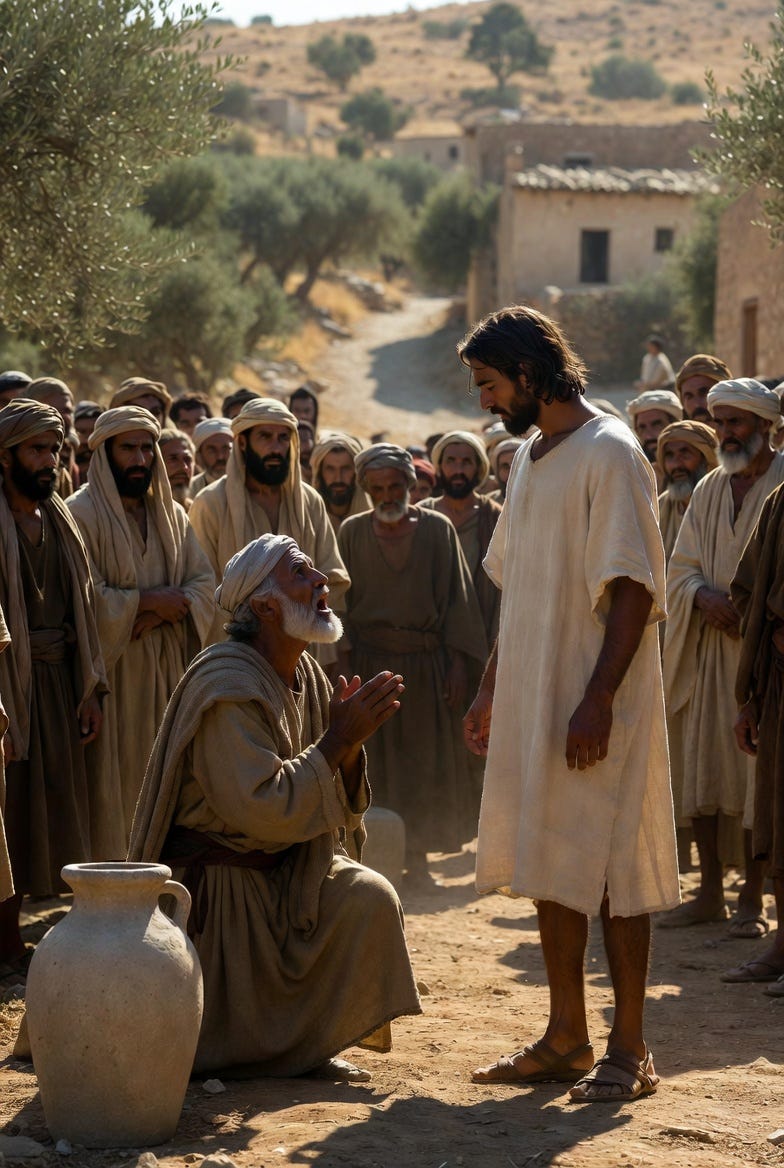
By your humble correspondent in Corinth The 12th day of the month of Elul, in the 19th year of Tiberius Caesar.
Word travels fast along the Via Egnatia and across the sea from Galilee. A high-ranking official in Herod Antipas’s service has publicly declared that his dying son lives, not thanks to physicians or costly sacrifices, but because a wandering rabbi from Nazareth spoke one sentence in Cana.
The official, a man of status connected to the tetrarch’s court, rushed from Capernaum to Cana upon hearing that Jesus had returned from Judea. His son lay burning with fever, teetering on the edge of death. In a culture where a father’s honor rose or fell with the survival of his heir, this was no private grief, it carried real public weight.
Approaching Jesus amid the crowd, still buzzing from the wedding feast where water became wine, the official begged him to come down and heal his boy before it was too late. Jesus, already known for upending expectations, replied, “Unless you see signs and wonders, you will not believe.”
The official persisted in his desperation. Jesus then declared simply, “Go; your son will live.” The man believed the word and started the journey home. Servants met him on the road with astonishing news: the fever had left his son at the exact seventh hour, the very moment Jesus spoke.
Now entire households in Capernaum are talking about it. Greek residents, used to Asclepius shrines and debates about distant gods, are whispering that this rabbi heals without even showing up. Jewish observers note the striking scene: a man of standing humbling himself before an uncredentialed teacher from Nazareth, without demanding a spectacle first.
In a world built on patronage and public reciprocity, this quiet belief has flipped the script crediting power not to Rome, Herod, or family status, but to a single authoritative word.
Cultural Shocks Most Modern Readers Miss
Honor-Shame Dynamics: In 1st-century Mediterranean culture, a father’s public identity often hinged on the health and survival of his sons. Begging a stranger risked real shame if things went wrong.
Patronage & Reciprocity: Healing usually came with strings attached gifts, public praise, or obligations. Here, the official received healing with no upfront ritual or guarantee.
Distance & Faith Over Magic: Greco-Roman and Jewish wonder-workers typically needed to be present or use objects. A spoken word from miles away challenged everything people expected about how divine power worked.
Belief Without Signs First: Jesus pointed out the common craving for visible proof first. Trusting the word alone was the real jolt in an age that loved signs and spectacles.
Biblical Shocking Takeaway: True authority speaks life across distance and status barriers. The greater miracle may be the kind of belief that acts on a word without demanding a show first.
If a single sentence from an unlikely source could save what mattered most to you, would you believe it on the spot and start walking or would you still demand proof first? What “signs and wonders” do we chase today instead of simply trusting the word?
Follow this Link for Extra context & deeper dives:
© 2026 Galilee Publications Just reading what’s written. Walk with us on the ancient paths.