
The Temple Jesus Actually Knew (and the One He’s Coming Back To)

Most of us carry a mental image of the Jerusalem Temple: towering walls, warning stones that threatened death to Gentiles who ventured further, a special Court of the Women with balconies, men only past the fifteen steps, and priests alone at the altar. That picture is historically accurate: but only for the final, Herodian version of the Second Temple in Jesus’ day.
It is not the tabernacle God commanded Moses to build. It is not the temple David planned by the Spirit or Solomon constructed. And it is not the temple the prophets describe for the age to come.
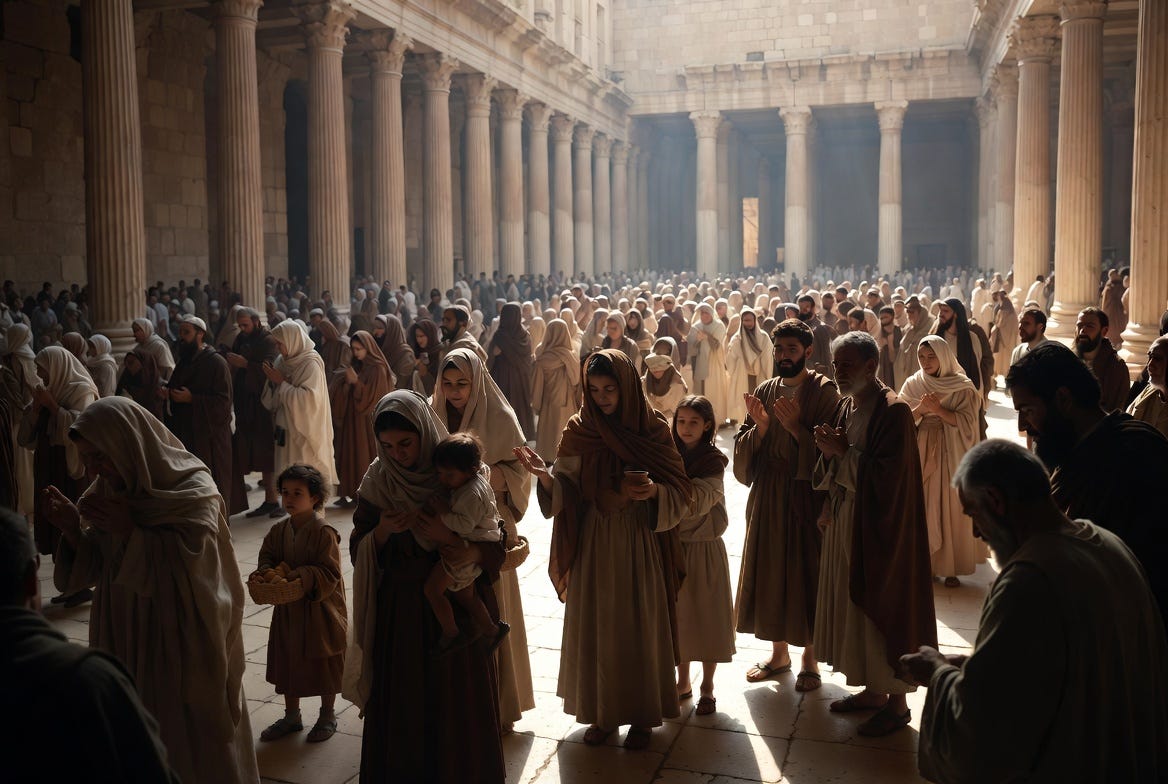
Jesus and the apostles lived in a religious system that had become broken and fragmented. Human traditions had multiplied. Power struggles were fierce. Religious zealots even resorted to murder to protect their system. Into that chaos, Jesus came to call God’s people back to the simple, open pattern established from the beginning.
The Second Temple Got Many Things Right
The daily offerings were restored. The Levites sang the Psalms again. Passover drew thousands. The Torah was taught publicly, and the Feast of Tabernacles was filled with joy and splendor.
But on one major issue they drifted from the original design. They built physical walls and legal barriers that separated men from women (by power structure) in the very house meant to unite God’s covenant family.
The Original Pattern was Simple and Open
David was a man after God’s own heart. The Holy Spirit gave him the temple plans in writing (1 Chronicles 28:11-19). Solomon built exactly according to that revelation. Neither was ever instructed to create a Court of the Women.
Solomon’s Temple featured one great court for all the assembly of Israel and an inner priestly court (1 Kings 7:12; 2 Chronicles 4:9).
The Torah made no distinction: every clean Israelite (man or woman) laid hands on their offering at the same place, “the doorway of the tent of meeting” (Leviticus 1–5, 12:6–8, 15:29).
Worship was shared and joyful: Hannah prayed at the sanctuary doorposts, women served at the entrance, and men, women, and children danced and sang together before the Lord (1 Samuel 1; Exodus 38:8; 2 Samuel 6; Psalm 68:25).
Ezekiel’s vision of the restored temple returns to this same simple design: two courts, with men, women, and children moving together through the same gates on the feast days (Ezekiel 46:9–10). No separate women’s court. No balconies. No barriers.
The first mention of a “new court” appears under King Jehoshaphat (2 Chronicles 20:5). Though a good king, there is no record that God commanded this addition. It was a later human development that eventually became the segregated Court of the Women in Herod’s temple.
Jesus and the First Witnesses
Jesus never endorsed those extra walls. He instructed women openly in the temple courts. He honored Anna the prophetess, who “never left the temple” (Luke 2:37). And when it mattered most, at the resurrection, it was women who were the first to see the risen Lord, the first to receive the commission to tell the others, and the first to believe.
The torn veil was decisive. Every barrier between God and His people was removed.
The Temple He Is Coming Back To - and the Church Today
The temple of the age to come will reflect the Father’s original heart:
One great open court
One redeemed people (male and female, Jew, and Gentile) worshiping together as family
With the King Himself dwelling in their midst
Yet here is the tragedy: the New Testament declares, “There is neither Jew nor Gentile, neither slave nor free, nor is there male and female, for you are all one in Christ Jesus” (Galatians 3:28). Jesus tore down the dividing walls. But large parts of the church have quietly reverted to the very temple corruption Jesus confronted: rebuilding barriers of separation in worship, leadership, and sacred space that Scripture never authorized.
We can honor what the Second Temple got right while refusing to call its man-made walls “God’s design.” God’s house was always meant to gather His sons and daughters as one. That is the pattern Jesus modeled, the apostles proclaimed, and the future temple will fully restore.
Which temple will we follow: the one with the extra walls, or the open house God originally commanded?
Thank you for walking the ancient paths with us.
Blessings,
William
Follow this Link for Extra context & deeper dives: