
The Good Samaritan Parable
+The Pulse of the Galilee Gazette Satire

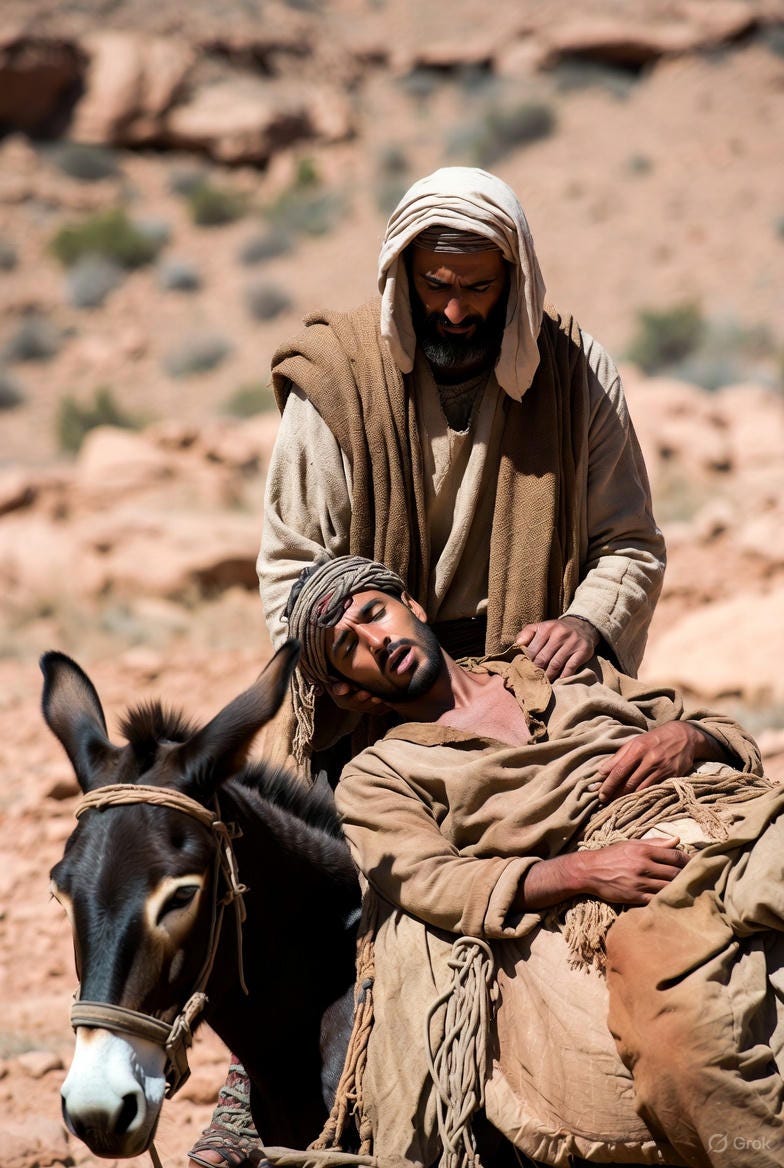
Discover the deeper meaning behind the Good Samaritan parable and why it unlocks the satire in the Galilee Gazette. Explore temple life, mercy over ritual, and timeless lessons, perfect for understanding this week’s dispatch.
Introduction
What if the most famous story about compassion in the Bible isn’t primarily about being kind but about exposing a heartbreaking conflict in the hearts of faithful people?
Many readers today know the Parable of the Good Samaritan as a simple call to “help others.” Yet when Jesus told it to a knowledgeable lawyer asking, “Who is my neighbor?”, He aimed deeper. The parable challenges the religious system of the day, revealing how even sincere devotion can sometimes blind good people to God’s greatest priorities: justice, mercy, and faithfulness.
This reflection serves as an essential key for anyone following the Galilee Gazette, a satirical “ancient newspaper” recreating events from first-century Judea with humor and bite. The Gazette’s dispatches often mock the baffled religious leaders who lose arguments to Jesus or find their rules turned upside down. Without understanding the tension in stories like the Good Samaritan, the satire can feel confusing or overly harsh.
Here, the historical and scriptural context is unpacked step by step: the demands of temple service, the purity laws that tore at devoted servants, the shocking choice of a Samaritan hero, and even parallels to despised Greek culture.
Stick around to the end for a quick FAQ and see exactly how this parable connects to the latest Gazette edition. The insights here will transform how the satire lands, turning “Oh, that’s funny” into “Oh... that’s profound.”
The Parable of the Good Samaritan in Luke 10:25-37
The Parable of the Good Samaritan is familiar to many, yet its sharpest edges often go unnoticed in modern retellings.
A traveler lies half-dead on the Jericho road.
A priest passes by on the opposite side.
A Levite does the same.
A Samaritan stops, binds the wounds, and pays for full care.
Jesus concludes: Go and do likewise.
Popular readings cast the priest and Levite as heartless hypocrites and cold-blooded men who simply lack compassion.
That view misses the deeper tension Jesus exposes.
These two figures are temple servants, likely traveling to their assigned duties in Jerusalem.
Understanding why they pass by requires stepping into the world of the Second Temple and seeing the demands placed upon them.
The Temple and Its Servants
The Jerusalem temple stood as the center of Jewish life, a massive complex of courts, gates, and chambers rising on the Temple Mount.
Thousands ascended its steps daily for prayer, sacrifice, and festivals.
Service there followed a strict rotation established centuries earlier (1 Chronicles 24).
The priests descended from Aaron; the Levites assisted them.
Both groups divided into 24 “courses,” each serving one week twice a year, plus the major holy days OR roughly four weeks total out of the year.
During those weeks, purity mattered above all.
Touching blood or a corpse rendered a person ritually unclean for seven days (Numbers 19:11-13).
Priests faced even stricter rules: “He shall not go near a dead body… even for his father or mother” (Leviticus 21:11).
A half-dead stranger bleeding on the roadside presented a real risk.
If the man died while being helped, the priest or Levite would contract impurity and miss their sacred course.
The sacrifices for the nation’s sins would proceed without them.
These men spent their temple weeks mediating forgiveness, offering lambs, goats, and bulls so Israel could approach a holy God.
Their hands sprinkled blood on the altar, pronounced blessings, and carried the weight of atonement for an entire people.
Yet outside those weeks, many in their class became the sharpest critics of sinners, the quickest to condemn those deemed impure.
The Heart of the Conflict
The priest and Levite are not villains by nature. Christians believe that, but erroneously.
Even the good ones, those sincerely devoted to God and faithful in their service, found themselves torn by the prevailing doctrine of the day. (This reality speaks to all of us.)
The system compelled them to prioritize temple duty and ritual purity over immediate mercy.
Stopping to help risked disqualifying them from the very work of atonement they believed God had called them to perform.
In their minds, service to the temple outweighed service to one wounded traveler.
Jesus does not deny their dedication.
They keep the letter of purity laws meticulously.
They honor the temple system.
What they neglect are the “weightier matters” of the Torah itself: justice, mercy, and faithfulness (Matthew 23:23).
The same God who commanded ritual cleansing also declared, “I desire mercy and not sacrifice” (Hosea 6:6, quoted by Jesus in Matthew 9:13 and 12:7).
The Samaritan: A Stinging Contrast in First-Century Context
The choice of a Samaritan as the one who shows mercy heightens the rebuke.
In first-century Judea, Samaritans were despised by many Jews and viewed as descendants of foreigners resettled after the Assyrian conquest, with a rival temple on Mount Gerizim (destroyed centuries earlier but still a point of division).
Jews and Samaritans shared deep historical enmity: separate worship sites, accusations of impure lineage, and mutual avoidance (”Jews have no dealings with Samaritans,” John 4:9).
Yet Samaritans were a known quantity in society, close enough to be familiar, different enough to be hated.
This outsider status parallels another cultural dynamic Jesus likely drew upon: the Pharisees and Sadducees’ deep-seated resentment toward Greek (Hellenistic) culture.
Rooted in the Maccabean revolt against Seleucid Greek rule two centuries prior, this hatred stemmed from fears of assimilation, Greek customs, philosophy, and idolatry eroding Jewish traditions.
The Pharisees, in particular, championed strict separation to preserve purity, while Sadducees, though more aristocratic and sometimes Hellenized, joined in opposing external influences that threatened the temple establishment.
Ironically, ancient Greek society embodied a virtue that better aligned with the Torah’s call to mercy: xenia, or philoxenia, the sacred duty of hospitality to strangers, often protected by Zeus Xenios (the god of guests).
In Greek thought, a traveler or stranger deserved immediate aid, food, shelter, and protection without first inquiring about their identity, as they might even be a god in disguise.
This concept, prominent in works like Homer’s Odyssey, emphasized generous, unconditional care for the vulnerable, echoing the very neighborly love the priest and Levite bypassed.
Jesus, immersed in this multicultural world, was not oblivious to these contrasts.
By elevating the Samaritan, an ethnic and religious “other” akin to the hated Greeks in Jewish eyes, he delivers a profound rebuke: even outsiders, with their foreign ways (like Greek xenia), can grasp and enact true mercy more readily than those bound by rigid temple purity.
The parable underscores that God’s intent transcends cultural barriers, calling insiders to learn from the unexpected.
The Samaritan, an ethnic and religious outcast with no temple purity to safeguard, sees suffering and acts without hesitation.
Oil and wine for wounds, his own donkey for transport, two denarii for the innkeeper, these are costly mercies.
He embodies the command to love neighbor as self, rising above barriers that the devout insiders could not (or would not) cross.
Reading the Gazette with This Key
The Galilee Gazette dispatches arrive as satirical “ancient news” from the streets of first-century Galilee and Judea.
They report events as a contemporary tabloid might, complete with headlines, eyewitness quotes, and the spin of those who lost the day.
When the Gazette covers a confrontation between Jesus and religious leaders, the humor often lands on the losers: the Pharisees left speechless, the priests scrambling for excuses, the temple elite suddenly silent before an unwashed crowd.
The satire works because the same men who stand in the temple mediating forgiveness can, weeks later, wield the Law like a weapon against the hurting.
The Good Samaritan parable serves as the master key.
It reveals the tragic irony Jesus exposes: sincere devotion to ritual purity and temple service can blind faithful people to the very mercy their service points toward while even despised outsiders (or pagan cultures like the Greeks) can grasp and practice true neighborliness.
Even the good priest and Levite, torn between doctrine and compassion, are compelled by the system to choose service over mercy.
Next time a Gazette edition mocks the baffled experts after Jesus heals on the Sabbath or reports the crowd’s delighted roar when scribes are outargued, remember the roadside scene.
The laughter arises from the same tension: those entrusted with forgiveness sometimes withhold it most fiercely outside the temple courts, while unexpected “outsiders” show what mercy truly looks like.
This parable invites every reader to ask: Where might today’s habits of “purity”, doctrinal, moral, or social, cause passing by on the other side?
And who, unexpectedly, stops to show mercy?
Pair this reflection with the latest Galilee Gazette dispatch.
The correlation becomes clear: the satire stings because the underlying issue remains timeless.
Mercy triumphs over sacrifice.
The outsider often sees what the insider misses.
And the road from Jerusalem to Jericho still waits for travelers willing to get their hands dirty.
Conclusion
The Parable of the Good Samaritan remains a master key because it uncovers a timeless tension:
Sincere religious duty can conflict with immediate compassion.
Systems meant to honor God sometimes blind faithful servants to His heart for mercy.
Outsiders, despised or foreign, often model neighborly love better than insiders.
This understanding transforms the Galilee Gazette from mere humor into sharp, scriptural insight. The satire no longer feels distant; it challenges every reader today.
Take the key and read this week’s dispatch anew. Notice how the religious leaders’ defeats echo the priest and Levite’s detour and how Jesus consistently elevates mercy.
What stands out most now? Share thoughts below.
FAQ
Why did the priest and Levite really pass by the injured man?
They faced a genuine conflict: helping risked ritual impurity that would disqualify them from temple service and national atonement duties.
How does the Good Samaritan parable relate to the Galilee Gazette’s satire?
The Gazette mocks religious leaders who lose debates with Jesus, the same irony of devoted insiders missing mercy while “outsiders” (or Jesus) embody it.
What is Greek xenia and why does it matter here?
Xenia was the ancient Greek sacred duty of hospitality to strangers, a virtue even pagans practiced, sharpening Jesus’ rebuke of Jewish leaders who bypassed it.
Is the parable saying temple service is bad?
No, it highlights that ritual without the weightier matters (justice, mercy, faithfulness) misses God’s intent.
How can readers apply this today?
Examine personal or community “purity” habits that might cause passing by those in need and choose costly mercy instead.