
When the Words of God Go Unquoted
Toward a Scripture-Saturated Conversation

Many come to platforms like Substack seeking a rare gift: brothers and sisters in Christ wrestling together with the same sacred text, offering fresh angles on ancient words, correcting one another in love, and sharpening minds through careful exposition of Scripture. The hope runs deep to encounter reflections soaked in the actual words of prophets and apostles, to meditate on passages opened line by line, to
discover where interpretations align and where they must be refined by the text
itself. Such shared submission to the Word promises true fellowship, the kind
that builds up the body and guards against error.
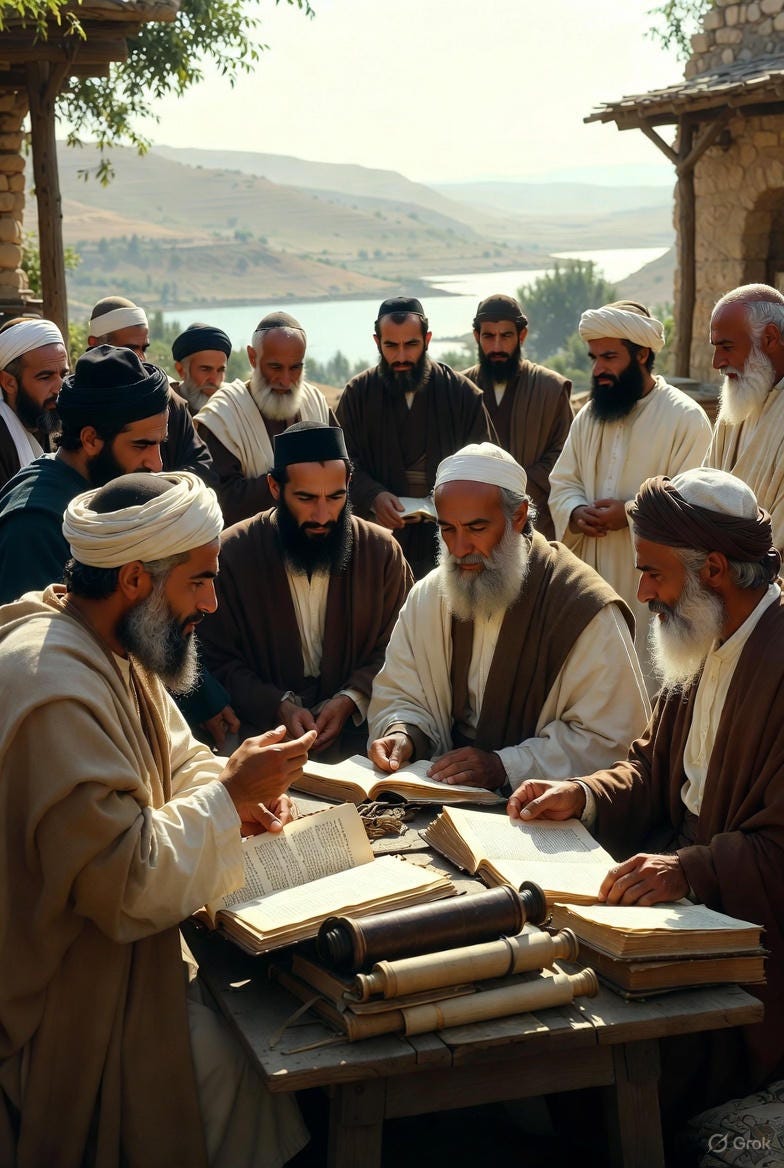
Yet what often appears instead is eloquent commentary on culture, insightful diagnosis of the moment, and pastoral warmth accompanied by precious little direct quotation of the Bible. Passages are alluded to, themes are summarized, verses are nodded toward, but the words themselves rarely appear on the page. The very words for which prophets endured torture, apostles faced stoning, and faithful witnesses
accepted exile, chains, and death go largely unquoted.
This absence matters…deeply.
Consider first the weight of those words:
No prophecy of Scripture came about by the prophet’s own interpretation of things. Rather, “prophets, though human, spoke from God as they were carried along by the Holy Spirit” (2 Peter 1:21).
The cost was immense:
Of whom the world was not worthy they wandered in deserts and mountains, and in caves and holes in the ground… Some faced jeers and flogging, and even chains and imprisonment. They were put to death by stoning; they were sawed in two; they were killed by the sword. (Hebrews 11:37-38, selections)
To speak at length about the faith while rarely letting these hard-won words speak for themselves feels, at minimum, like ingratitude. At worst, it risks treating the Bible as a
distant backdrop rather than the living voice of God.
Scripture itself refuses to allow such distance.
The command comes clear and repeated:
These commandments that I give you today are to be on your hearts. Impress them on
your children. Talk about them when you sit at home and when you walk along the
road, when you lie down and when you rise… Write them on the doorframes of your
houses and on your gates. (Deuteronomy 6:6-9)
Keep this Book of the Law always on your lips; meditate on it day and night, so that
you may be careful to do what is written in it. (Joshua 1:8)
I have hidden your word in my heart that I might not sin against you. (Psalm 119:11)
The promise stands sure:
“I will put my laws in their minds and write them on their hearts” (Hebrews 8:10).
Yet the promise never cancels human responsibility. God works, but only with willing participants who open the text, read it aloud, repeat it, memorize it, and let it dwell richly within.
When Christian voices, especially those claiming pastoral authority, consistently speak without opening the Scripture and letting it speak at length, something vital erodes. A generation grows up hearing mostly human wisdom seasoned lightly with biblical flavor. Young people depart the churches in waves, and leaders wring hands over the loss. Might the connection be clearer than many admit? When the rising
generation rarely hears what God actually expects, commands, and promises in
His own words unfiltered, unhurried, and undiluted they receive mostly the
teacher’s personality and insight. Loyalty to a voice eventually wanes. Loyalty
to the unchanging Word endures.
Imagine the alternative. Picture Christian writing on platforms like this one saturated with Scripture: long quotations, careful exposition, competing interpretations tested openly against the text, gentle corrections offered in love. Readers would leave not
merely informed, but transformed minds renewed, hearts stirred, faith deepened
by the Spirit who inspired the words in the first place.
The call remains simple. Let writers open the Bible and let it speak. Quote it generously. Unpack it patiently. Trust its power. Let readers seek out and encourage voices that do the same.
All Scripture is God-breathed and is useful for teaching, rebuking, correcting and training in righteousness, so that the servant of God may be thoroughly equipped for every good work. (2 Timothy 3:16-17)
This return to the text is needed by all, including the one posting these words today.
Let the words of the prophets and apostles once again drip like honey from our lips not merely to inform the mind, but to woo the soul toward the One who spoke them first.
May the words of God not go unquoted among His people.
- William
Follow this Link for Extra context & deeper dives: